

Table of Contents
- What Makes Home Office Furniture High Quality
- Ergonomic Office Chairs for Remote Work: What to Prioritize
- High-Quality Office Desks That Support Productivity
- How to Choose Home Office Furniture That Fits Your Space
- Best Home Office Furniture Stores: Where to Shop with Confidence
- Key Quality Checklist Before You Buy
- Frequently Asked Questions
Last Updated: October 16, 2026
What Makes Home Office Furniture High Quality
When you're shopping for home office furniture, quality separates a setup that lasts five years from one that falls apart in two.
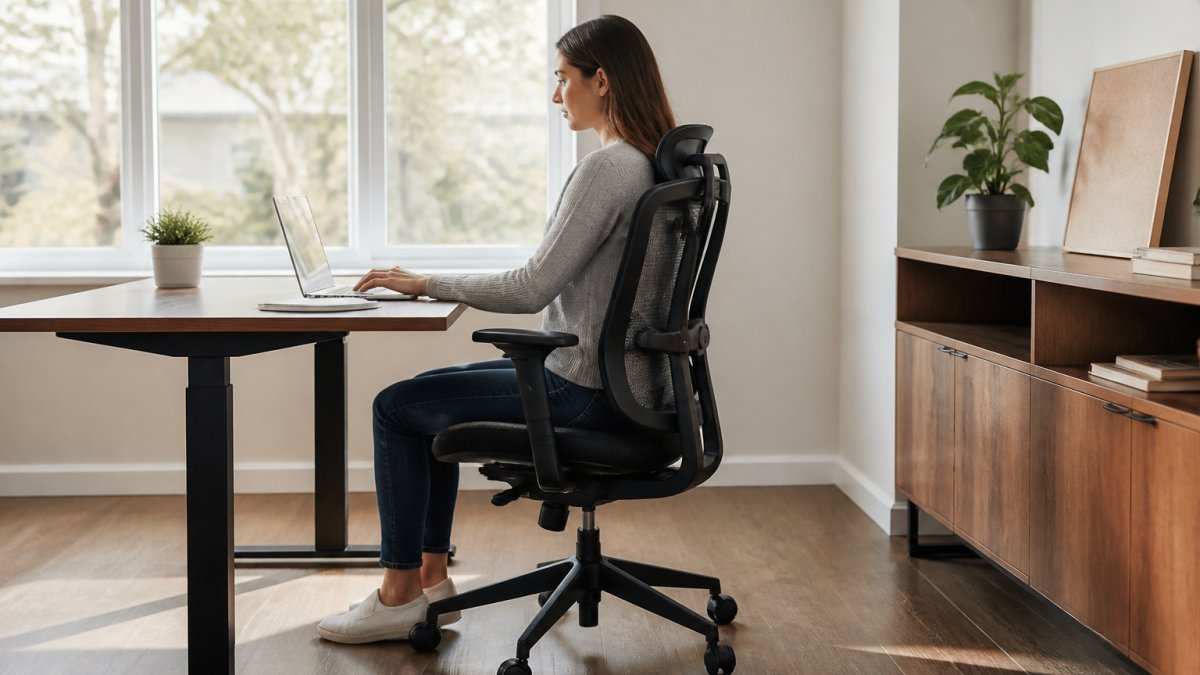
At classiccomfortcreations, we focus on three standards: adjustability and thoughtful design reduce strain; and responsive support signal a brand worth buying from.
Look for certifications or testing standards, and check whether the manufacturer publishes load-bearing capacity, material specs, and assembly requirements.
Ergonomic Office Chairs for Remote Work: What to Prioritize
An ergonomic office chair is the single most important investment in your home office. You spend 8+ hours per day sitting, so a chair that forces poor posture will cause back pain, neck strain, and fatigue. Below is measurable fit guidance you can apply with a tape measure.
Start With Measurements, Not Marketing
Ergonomic fit is a math problem, not a feeling. Before shopping, record four numbers:
- Popiteal height, floor to the crease behind your knee, seated with feet flat. This is your target seat height; most adults fall between 16 and 21 inches.
- Seat depth, back of your buttocks to the back of your knee, minus 2 to 3 inches, so the seat edge doesn't press into your legs. Typical range is 16 to 20 inches.
- Elbow height, measured seated with shoulders relaxed. Your desk surface should sit at or just below this line so elbows rest near 90 degrees.
A chair is only ergonomic if its adjustment range covers your numbers. A 17-to-21-inch height range won't fit someone whose popliteal height is 15 inches, no matter how many lumbar knobs it has.
Adjust the Chair in This Order
Most people adjust their chair randomly and wonder why it never feels right. Use this sequence:
- Seat height first. Feet flat, thighs roughly parallel to the floor. If your feet dangle, add a footrest rather than lowering the chair below your desk.
- Seat depth second. Slide the seat pan until you have 2 to 3 fingers of space behind your knees.
- Backrest height and angle third. The lumbar curve should press into the small of your back, roughly at belt level. Recline 100 to 110 degrees for the least spinal load.
- Armrests last. Forearms rest lightly, shoulders relaxed. If armrests push your shoulders up, lower or remove them.
- Then set the desk. Desk height should follow the chair, not the other way around.
Match the Chair to Your Body Size
Chair sizing is not one-size-fits-all, and most product descriptions fail you here.
- Under 5'4", Seat heights starting at 15 to 16 inches, seat depths of 16 to 17 inches, and a backrest that reaches your shoulder blades without towering over your head. Standard chairs often run too tall and too deep.
- 5'4" to 6'0", Most standard ergonomic chairs fit. Prioritize adjustable seat depth and a height range that covers your popliteal measurement with room to spare.
- Over 6'0", Seat depths of 19 to 21 inches, backrests reaching the top of your shoulders, and a weight rating comfortably above your body weight. A chair rated only slightly above your weight wears out faster at the gas cylinder and base.
Material and Durability Considerations
Office chair materials fall into three camps: mesh, fabric, and leather (or synthetic leather). Mesh breathes well for warm offices; fabric is affordable but traps dust; synthetic leather, like the PU material on classiccomfortcreations's chair, is durable, easy to clean, and doesn't crack like cheap vinyl.

Durability depends on reinforced seams, a solid metal base, and a gas cylinder rated for your weight. Cheap chairs often fail at the base or armrest joints within a year or two; quality chairs, properly maintained, last 5-7 years.
Adjustability Features Worth Paying For
Not every knob and lever earns its price. Rank features in this order:
- Seat height adjustment, non-negotiable.
- Adjustable seat depth, the most underrated feature; it determines whether the chair fits your leg length.
- Lumbar support that moves up and down, fixed lumbar only fits one body type.
- Armrests adjustable in height and width, flip-up or 4D armrests let you tuck the chair under the desk and support your forearms without lifting your shoulders.
- Tilt tension and lock, lets you shift positions and lock the chair when you need stability.
A chair with all five, sized to your measurements, will outperform a pricier chair with features that don't match your body.
Test Before You Commit
If you can sit in the chair before buying, adjust it to your measurements, sit for at least 10 minutes, and check for pressure points at the front of the seat, the small of your back, and your shoulders. Buying online?
High-Quality Office Desks That Support Productivity
Your desk is the platform for your work. It needs enough surface area for your monitor, keyboard, and reference materials, must be sturdy enough not to wobble when you type or lean on it, and should fit your space without dominating the room.
Fixed vs. Adjustable Workspace Solutions
Fixed desks sit at one height, are typically cheaper, and take up less space. Adjustable (or standing) desks let you alternate between sitting and standing, reducing the strain of one position all day.
The tradeoff is cost: a quality adjustable desk runs $300-500 or more, while a solid fixed desk costs $150-300. If your budget is tight, a good fixed desk beats a cheap adjustable one; if you can stretch, adjustability is worth it.
Storage and Surface Area Needs
Before you buy, measure your actual needs. A typical setup requires space for a monitor (or two), keyboard, mouse, and room to write, roughly 24-30 inches of depth and 36-48 inches of width.
The 39.7in x 19.7in Tea Wood Lift Top Desk Coffee Table from classiccomfortcreations offers an unconventional solution at $133.99.

This piece works best as a secondary workspace or for someone who needs flexibility between sitting and standing.
How to Choose Home Office Furniture That Fits Your Space
Most buying guides tell you to "measure your room." That's not enough. Furniture that fits the floor plan can still be unusable if you can't pull the chair back, open a drawer, or walk behind the desk. Here are the clearance numbers and layout steps competitors skip.
PU LEATHER ERGONOMIC ADJUSTABLE OFFICE/GAMING/DESK CHAIR →
Measure These Five Numbers First
Before you look at a product page, record:
- Wall length where the desk will sit, in inches.
- Available depth from that wall to the nearest obstruction (bed, door swing, closet).
- Door and drawer swing zones, the arc of any door that opens into the space.
- Window and outlet positions, height from the floor and horizontal distance from the corner.
- Walkway width, the narrowest path between existing furniture.
Clearance Rules That Actually Matter
These are the minimums most ergonomics and interior-planning practitioners use:
- Chair pull-back zone: 30 to 36 inches of depth behind the desk so you can stand up and push the chair back without hitting a wall.
- Primary walkway: 36 inches wide for a main path; 24 inches is the absolute minimum for a secondary path.
- Drawer extension: Add the full drawer depth to the desk footprint. A desk with 20-inch drawers needs 20 inches of clear space in front of it.
Three Layouts That Work in Real Rooms
Layout 1: The wall-anchored desk (small bedroom, 8x10 feet) Place the desk against the longest wall, centered on an outlet. Use a 40-to-48-inch-wide desk with 24-inch depth and a chair that tucks fully under it.
Layout 2: The L-shaped corner (shared room, 10x12 feet) Use a corner desk or two desks joined at 90 degrees to use dead space and gain a writing zone plus a monitor zone.
Small-Space Measurement Steps
If your room is under 100 square feet, run this sequence:
- Mark the desk footprint on the floor with painter's tape, including the chair pull-back zone.
- Walk the taped path for a full day. If you bump the tape repeatedly, the layout is wrong.
- Confirm the desk height plus monitor height does not block a window you want to keep open.
- Check that at least one outlet is reachable without an extension cord crossing a walkway.
- Verify the door can open at least 90 degrees with the furniture in place.
Match the Furniture to the Workflow
- Video calls: You need a clean background and light in front of you, not behind. Position the desk so a window is in front or to the side, not directly behind your monitor.
- Multiple monitors: Prioritize desk depth (30 inches or more) and a stable surface. A wobbling desk is worse than a small one.
- Paper-heavy work: Add a secondary surface or a desk with a return. A single 48-inch desk runs out of room fast.
Plan for Growth Without Overbuying
Buy the desk and chair that fit your measurements today, then add storage or a monitor arm later. Choose finishes and hardware that will still be available in a year so upgrades match.
Best Home Office Furniture Stores: Where to Shop with Confidence
Not all furniture retailers are equal. Some prioritize speed and price over quality; others charge premium prices for basic pieces. The best balance quality, selection, and customer support.
classiccomfortcreations stands out with a curated selection of home office furniture alongside a broader range of home essentials, so you can furnish your workspace in one place. Our catalog includes ergonomic chairs, adjustable desks, storage solutions, and accessories, all selected for quality and value.
Quality Assurance and Durability Guarantees
When you buy from classiccomfortcreations, you're buying from a retailer that stands behind its products. We provide clear product specifications, material details, and weight-bearing capacities, plus assembly instructions and professional customer service. If something arrives damaged or doesn't meet your needs, our return policy and support team make it straightforward.
The best retailers publish detailed product information upfront, answer questions quickly, and handle problems without making you jump through hoops.
Return Policies and Customer Support
A solid return policy is your safety net when buying furniture online. You should be able to return items within 30 days if they don't work for your space, arrive damaged, or don't match the description.
Before purchasing from any retailer, check their return window, shipping policies, and how they handle damaged goods. A company that makes returns easy trusts its products.
Key Quality Checklist Before You Buy
Use this checklist to evaluate any home office furniture before you commit:
| Quality Factor | What to Check | Why It Matters |
|---|---|---|
| Material & Construction | Solid wood, metal, or high-grade synthetics; reinforced joints | Determines how long the piece lasts under daily use |
| Weight Capacity | Load-bearing specs for chairs and desks | Ensures stability and safety during extended use |
| Adjustability | Height, armrests, tilt, rocking mechanisms | Allows you to customize for ergonomic comfort |
| Surface Area | Desk depth and width for your actual workflow | Prevents cramped workspace and reduced productivity |
| Storage Options | Built-in shelving, drawers, or hidden compartments | Keeps clutter organized and off your work surface |
| Assembly | Tools included, time required, difficulty level | Reduces frustration and hidden costs |
| Return Policy | 30-day minimum, clear restocking terms | Protects you if the piece doesn't fit your space |
| Warranty | Manufacturer guarantee on defects | Signals confidence in product quality |
| Customer Support | Responsive service, clear contact options | Matters when something goes wrong |
Before you click "add to cart," verify that the furniture meets at least 7 of these 9 factors. If a piece fails on material quality, weight capacity, or return policy, keep looking.
Building a high-quality home office takes thought, but it pays off in comfort and productivity. Browse our home office furniture collection and find the pieces that fit your space and budget.
Frequently Asked Questions
What should I look for when buying a home office desk?
Focus on surface area (at least 39 inches wide for a laptop and documents), height adjustability or fixed height that matches your chair, and sturdy construction to support your equipment. Storage capacity matters too, look for desks with drawers or shelves. The PU Leather Ergonomic Adjustable Office Chair pairs well with desks that offer height flexibility, and the Tea Wood Lift Top Desk Coffee Table provides both work surface and hidden storage for a compact workspace.
How do I choose an ergonomic chair for working from home?
Select a chair with adjustable height (18-22 inches is standard), lumbar support, and breathable material. Armrests should be adjustable or removable to save space. The PU Leather Ergonomic Adjustable Office/Gaming/Desk Chair at $153.99 features flip-up armrests, a hollowed-out back for breathability, and supports up to 275 lbs. Its rocking mode (0-45 degree swing) helps reduce strain during long work sessions.
What's the difference between quality home office furniture and cheap alternatives?
High-quality furniture uses durable materials (solid wood or chrome-plated metal), has weight capacity specifications, includes assembly hardware, and offers customer support. It also features adjustable components for ergonomic fit. Cheap alternatives often lack durability, have limited adjustability, and provide minimal support. Quality pieces are an investment in your health and productivity, they last years longer and prevent discomfort-related work interruptions.
Can I find everything I need for a home office in one place?
Yes. A complete home office requires an ergonomic chair, a desk with adequate surface area, and storage or organizational furniture. Classic Comfort Creations offers all three: the PU Leather Ergonomic Adjustable Office Chair ($153.99), the Tea Wood Lift Top Desk Coffee Table ($133.99) for workspace and storage, and the Overbed Bedside Sofa Table ($102.99) for flexible additional surface or laptop support. This combination covers seating, primary workspace, and auxiliary surfaces.