

Last Updated: November 22, 2026
Quick Summary
Essential kitchenware for new homes starts with a few everyday pieces: one 20-25cm skillet, a 2-litre saucepan with a lid, a chef's knife, a cutting board, measuring cups and spoons, and a nesting set of mixing bowls. Buy these first, then add storage and serving pieces as real cooking reveals gaps.
- Buy daily-use items first and specialty tools last, if at all.
- A three-piece cookware starter set covers most cooking: skillet, saucepan with lid, and stockpot.
- Stainless steel works on gas, electric and induction but is not non-stick.
- Keep knives sharp and use a separate board for raw meat.
- Buy Tier 1 items first, cook for two weeks, then add what you actually lack.
Table of Contents
- Cookware Essentials for a New Home: Pots, Pans and Skillets
- Knives, Cutting Boards and Food Preparation Tools
- Measuring Tools, Mixing Bowls and Bakeware
- Cooking Utensils, Storage and Serving Basics
- Building the List by Budget, Space and Household Size
- Booking Your First Kitchen Setup Order
- Frequently Asked Questions
Moving into a new home means building a kitchen from nothing, and the list of possible purchases is long enough to overwhelm anyone. This guide to essential kitchenware for new homes is designed to help you buy what you actually use and skip what you do not. Most first-time buyers spend far more than they need to because they buy by category instead of by daily use. The sections below start with a checklist you can print and work through in stages.
Print the checklist, tick off what you already own, and buy in the order that matches how you cook. Items you use every day come first. Specialty tools come last, if at all.
- Pots and pans: one 20cm skillet, one 2-litre saucepan, one stockpot
- Knives and boards: one chef's knife, one cutting board
- Measuring tools: a cup set and a spoon set
- Mixing bowls: a nesting set with lids
- Utensils: spatula, ladle, tongs, grater
- Storage: airtight containers, zip-top bags, foil, parchment
- Serving basics: plates, bowls, serving spoons
What to buy first: A skillet, a chef's knife and a set of mixing bowls cover most daily cooking. Everything else can wait until you know which gaps you actually feel.
Cookware Essentials for a New Home: Pots, Pans and Skillets
Cookware is where most new-home budgets get spent, so buy it deliberately. A practical starter set is three pieces: a 20-25cm skillet for searing, frying and sauces; a 2-litre saucepan with a lid for grains, soups and reheating; and a stockpot for batch cooking, pasta and stock. Add a fourth piece only when you cook for more than two people regularly or find yourself reaching for the same pan twice in one meal.
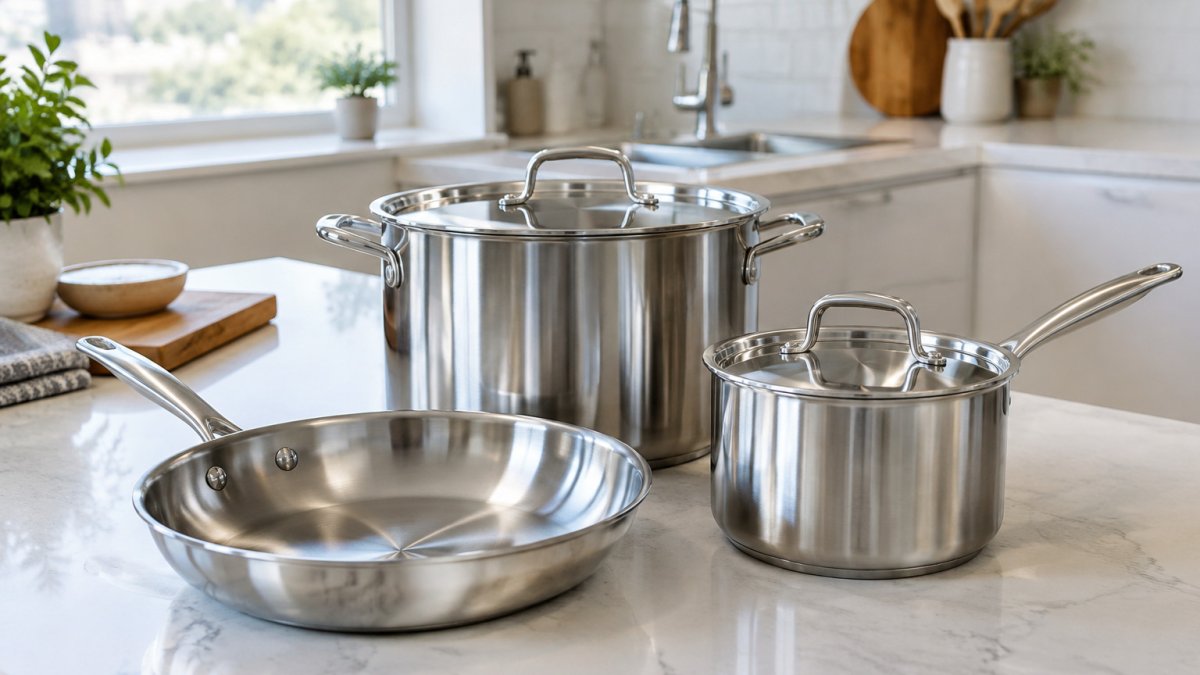
Material choice matters more than brand. Stainless steel is durable and works on gas, electric and induction cooktops, which makes it a practical first buy. It is not non-stick, so you need a little oil and a preheated pan. Non-stick coatings are easier for eggs and delicate fish but degrade faster when overheated or scrubbed with abrasive pads; keep heat medium and use wooden or silicone utensils. Cast iron sears well and can go from stovetop to oven, but it is heavy and needs seasoning and dry storage. Carbon steel sits between the two: lighter than cast iron, seasonable, and good for high heat.
Check three things before you buy. First, the base: a flat, thick base spreads heat evenly and stays flat on glass and induction tops. Second, the handle: it should stay cool on the stovetop and be riveted, not glued. Third, the lid: a tight-fitting lid turns a saucepan into a steamer and a skillet into a braiser, so match lids to the pans you actually own rather than buying a mismatched set.
Watch out: Heating an empty non-stick pan or cleaning it with steel wool strips the coating fast; most coatings last longer with medium heat and a soft sponge. Stainless steel can warp if plunged into cold water while hot, so let pans cool before washing.
Care and replacement are part of the purchase. Stainless steel and cast iron can last decades with basic care; non-stick pans typically need replacing when the surface scratches or starts to flake. If you cook on induction, confirm the pan is magnetic before buying, a fridge magnet stuck to the base is a quick test.
The article breaks cookware choice into material trade-offs, which a quick comparison makes easy to scan.
| Material | Best for | Key difference |
|---|---|---|
| Stainless steel | Gas, electric and induction; durable starter buy | Not non-stick; needs oil and a preheated pan |
| Non-stick | Eggs and delicate fish | Degrades when overheated or scrubbed with abrasives |
| Cast iron | Searing; stovetop to oven | Heavy; needs seasoning and dry storage |
| Carbon steel | High-heat cooking | Lighter than cast iron; seasonable |
Knives, Cutting Boards and Food Preparation Tools
One good chef's knife does more than a full block of cheap ones. Choose a blade you can hold comfortably and keep sharp. Pair it with a cutting board, and use a separate board for raw meat to avoid cross-contamination.
A peeler, a small paring knife and a sturdy grater round out basic prep. These cost little and get used constantly.
Measuring Tools, Mixing Bowls and Bakeware
Measuring cups and spoons are the cheapest way to get better results from recipes. Buy a stainless-steel set so the markings do not wear off.
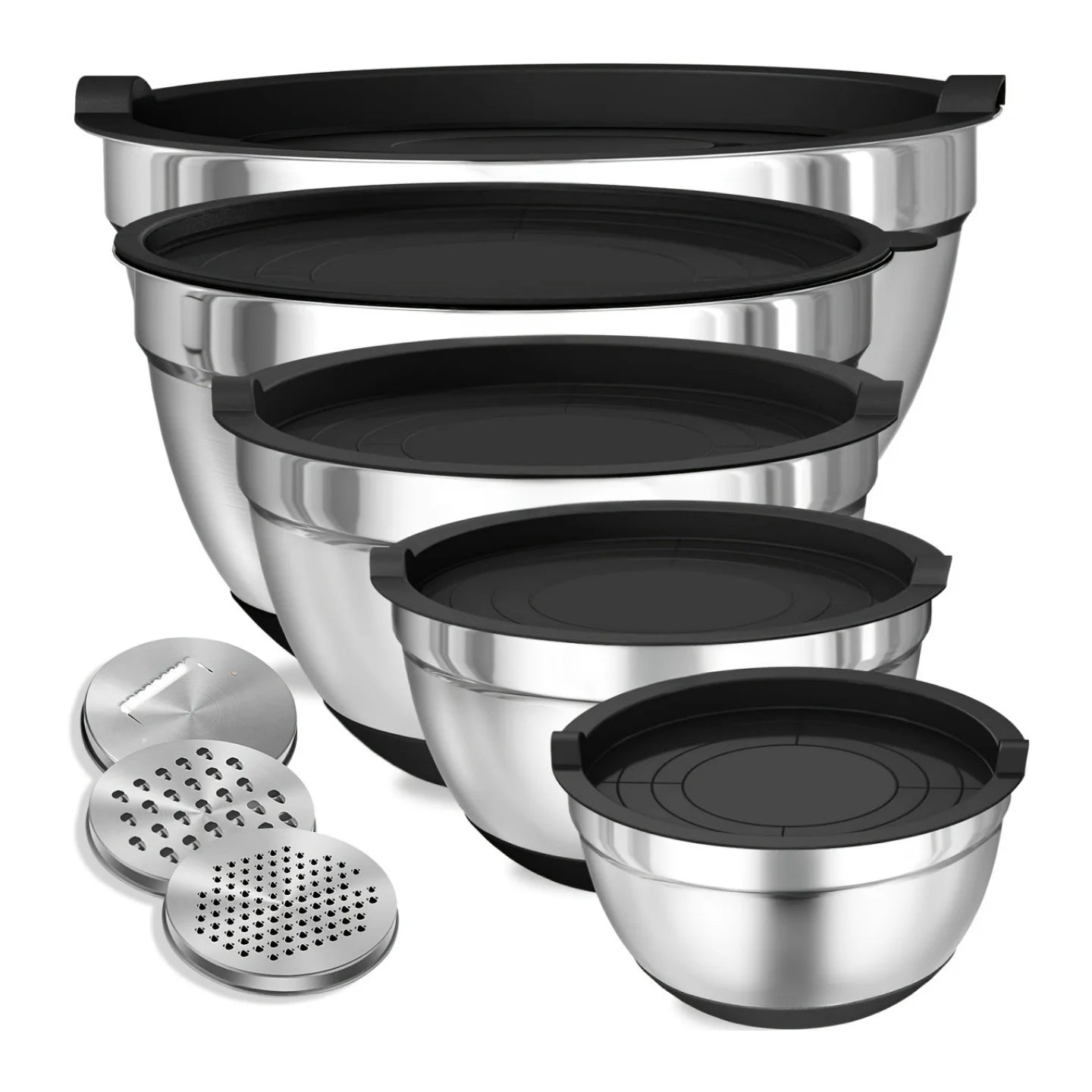
Mixing bowls are more useful in a set that nests and includes lids, so you can prepare, store and mix without extra containers. The 8pcs - STAINLESS STEEL KITCHEN MIXING BOWLS W/AIRTIGHT LIDS set covers that need in one purchase. For bakeware, start with one baking sheet and one loaf or cake pan, then add more only when a recipe calls for it.
Cooking Utensils, Storage and Serving Basics
Keep the utensil list short: a spatula, a ladle, a pair of tongs and a wooden spoon handle most cooking. Silicone heads protect non-stick surfaces.
Storage matters as much as cooking. Airtight containers keep leftovers fresh, and zip-top bags and foil or parchment cover most wrapping needs.
Building the List by Budget, Space and Household Size
Most new-home kitchen lists fail because they treat every item as equally urgent. A better approach is to sort purchases into three tiers and buy in order, so you are never cooking out of an empty cupboard while waiting to afford the last gadget.
Tier 1, cook this week. One skillet, one saucepan with a lid, one chef's knife, one cutting board, a cup and spoon set, a nesting bowl set, a spatula, tongs, a ladle, a wooden spoon, a grater, a can opener, a colander, and a few airtight containers. This tier covers most weeknight meals and costs the least per use.
Tier 2, cook comfortably. A stockpot, a baking sheet, one cake or loaf pan, a second cutting board reserved for raw meat, a paring knife, a peeler, a set of glass storage containers, and a small set of plates, bowls and serving spoons. Add these as the gaps show up in real cooking, not on day one.
Tier 3, cook for your style. A cast-iron skillet, a Dutch oven, a blender or immersion blender, a stand or hand mixer, a vacuum sealer, and specialty bakeware. These earn their space only if you already cook in ways that use them; a bread baker needs a loaf pan, a meal prepper needs containers and a sealer, and a person who rarely bakes can skip the mixer entirely.
Space changes the list more than budget does. In a small apartment or shared kitchen, favour nesting bowls, stackable containers, a folding colander, a magnetic knife strip or in-drawer insert instead of a block, and a single multipurpose pan over three single-use ones. Measure your tallest cupboard and widest drawer before buying a stockpot or a stand mixer; the best pan is the one you can store. Renters should also prefer items that move easily, lighter cookware, no wall-mounted racks that need drilling, and containers that double as serving dishes.
Household size shifts quantities, not categories. One person or a couple can run a kitchen on one skillet, one saucepan and a small stockpot. A family of four or more needs a larger stockpot, a bigger cutting board, more storage containers, and a second skillet so two dishes can cook at once. Meal preppers should weight the budget toward containers, a scale and a vacuum sealer; people who rarely bake can leave bakeware in Tier 3 indefinitely.
Watch out: Buying a full knife block, a 12-piece cookware set, or three colanders before you have cooked a single meal is the most common way first kitchens get cluttered and over budget. Buy Tier 1, cook for two weeks, then let the gaps tell you what to add.
Booking Your First Kitchen Setup Order
Start your order with the checklist items you use daily, then add storage and serving pieces once the core kitchen works. Browse the Classic Comfort Creations catalog and search for the items on your list before you buy. Buying in stages keeps your first kitchen within budget and lets you learn which tools you really need.
Frequently Asked Questions
What kitchen items are essential for a new house?
A new kitchen needs a few core pieces before anything decorative: one or two skillets, a saucepan, a stockpot, a chef's knife, a cutting board, measuring cups and spoons, mixing bowls, a spatula, a soup ladle, a can opener and a set of food storage containers. Start with these everyday tools, then add specialty items once you know how you actually cook. Buying the core list first covers most meals and avoids spending on duplicates you will not use.
What cookware should you buy first for a new home?
Buy a stainless-steel skillet and a saucepan first, since they handle the widest range of everyday cooking. A stockpot follows for soups, pasta and batch cooking. A nonstick skillet is useful for eggs and delicate foods, but it is not required from day one. Choose pieces with sturdy handles and flat bases so they heat evenly on your stove, and skip large sets with pieces you will never use.
What kitchen essentials do you need for a first apartment?
For a first apartment, focus on space-efficient essentials: one skillet, one saucepan, a chef's knife, a cutting board, a set of nested mixing bowls, measuring tools, a spatula, tongs and a few airtight containers. Nested or stackable pieces save cupboard space in small kitchens. Only buy bakeware or specialty gadgets once you cook the dishes that need them.
Which kitchen tools are worth buying before you move in?
Buy the tools you will use on the first day: a chef's knife, cutting board, can opener, measuring cups and spoons, and at least one pan and pot. Stainless-steel mixing bowls with airtight lids, such as the 8-piece set from our range at 40.99, cover prep and storage at once. An electric vacuum sealer is worth adding if you buy in bulk or portion meals, but it is optional for a first setup.
