

Table of Contents
- How to Verify Furniture Quality Online: A Step-by-Step Approach
- Examine Product Specifications and Materials
- Assess Frame Construction and Joinery Details
- How to Read Furniture Reviews and Customer Feedback
- Create a Furniture Quality Checklist
- Questions to Ask Before Buying Furniture Online
- Verify Seller Reputation and Delivery Protection
- Frequently Asked Questions
Last Updated: October 12, 2026
How to Verify Furniture Quality Online: A Step-by-Step Approach
Buying furniture online means you can't touch or inspect pieces in person. But you can verify furniture quality online by learning what to look for in product listings, reviews, materials, and seller details. Quality indicators are learnable, you just need to know what signals matter.
A damaged delivery, misleading photos, or poor craftsmanship can waste hundreds of dollars. This guide walks you through how to evaluate furniture quality online before you commit.
Examine Product Specifications and Materials
Start with the product listing. Quality listings publish detailed specifications; poor listings gloss over materials. Read everything the seller provides about what the piece is made of.
Solid Wood vs. Engineered Wood vs. Veneer
Solid wood is real wood throughout, durable, ages well, costs more. Look for named species: oak, maple, walnut, or pine.
Engineered wood uses a plywood or MDF core, cheaper and lighter but less durable. It can still be high quality; construction matters more than material alone.
Wood veneer is a thin layer of real wood over engineered wood. Quality veneer with proper backing lasts decades; poor veneer peels or cracks within months.
Quality listings specify which parts use solid wood versus veneer or engineered materials. If the description just says "wood," that's a red flag.
Upholstery, Fabric, and Leather Quality
For sofas and chairs, upholstery matters as much as the frame.
Fabric types vary: polyester is durable but less breathable, cotton comfortable but stains easily, linen attractive but wrinkles, blends combine strengths. Quality listings name the blend and fiber content.
Leather grades range from full-grain (best) to bonded (worst). Full-grain shows natural marks and develops character; top-grain is sanded smooth; bonded leather is scraps glued together that crack and peel.
Look for fabric weight in ounces per square yard, heavier fabrics (over 12 oz) resist wear better. Quality upholstery also specifies thread count and stitching.
Seams and stitching should be straight and tight, with close-up photos in the listing. Loose or uneven stitching signals poor craftsmanship.
Assess Frame Construction and Joinery Details
The frame is the skeleton: a strong one keeps furniture level and comfortable for years, while a weak one sags, squeaks, and fails. Since you can't knock on a frame through a screen, verify construction through listing language, photos, and seller answers.
Dowels, Corner Blocks, and Fasteners
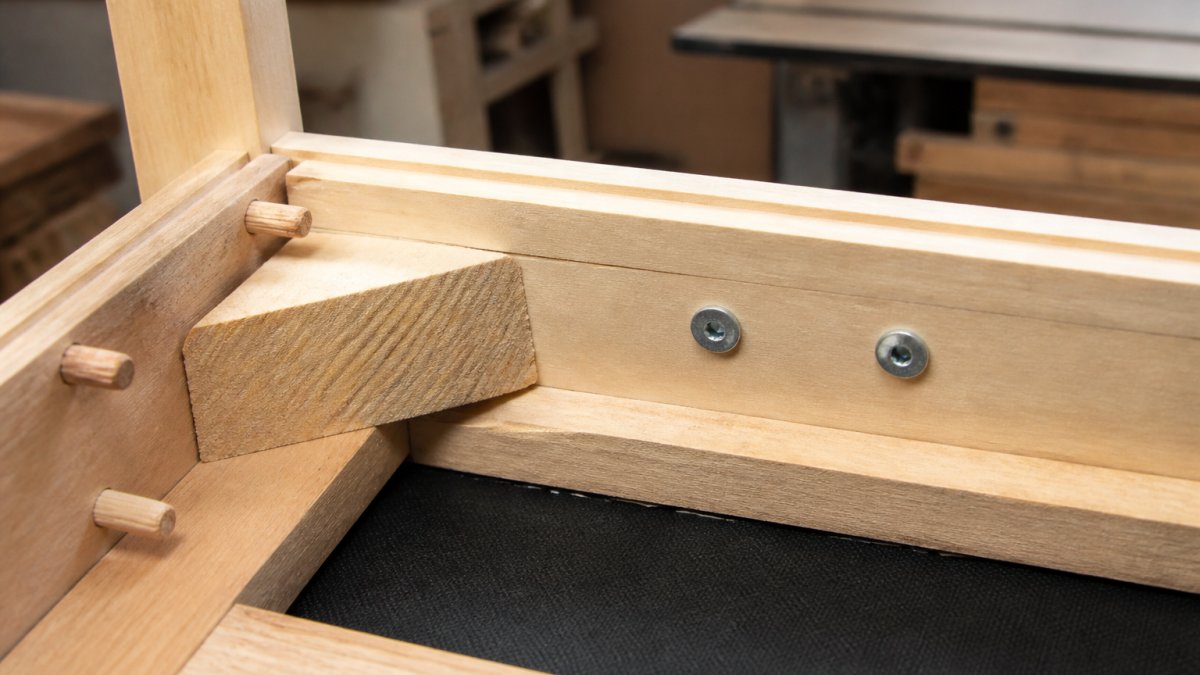
Dowels are wooden pins joining two pieces of wood, cheap but effective. Look for "doweled and glued" or "mortise-and-tenon joinery," a traditional joint where one piece fits into a cutout in another and which is stronger than a simple butt joint.
Corner blocks reinforce joints where frame pieces meet. Solid wood blocks glued and screwed beat plastic or cheap metal brackets. If the listing doesn't show the frame, ask for a photo of the inside corner.
Fasteners include screws, bolts, and metal plates. Stainless steel or zinc-plated resist rust; cheap fasteners corrode and weaken. Lower-cost furniture relies on staples and glue alone, while better furniture uses screws, bolts, and interlocking joints.
Screws versus staples: staples are fast and cheap but pull out under stress; screws hold better, especially with glue. "Screwed and glued" joints are a positive signal.
Corner bracing: diagonal braces or corner blocks prevent racking, the side-to-side twisting that makes furniture feel wobbly. Ask whether the frame has them if the listing doesn't say.
If the listing doesn't describe how joints are reinforced, ask the seller. A good seller answers quickly and specifically; a vague answer is a warning sign.
Suspension Systems and Support Mechanisms
Seat support affects comfort and durability, and it's easy to verify online because sellers often name the suspension type in the specs.
Eight-way hand-tied springs are the gold standard, expensive but excellent support that lasts decades. "Eight-way hand-tied" in a listing is a strong quality signal; "sinuous springs" is a different system.
Sinuous springs (no-sag springs) are cheaper wire springs running front-to-back. They're durable if properly secured, and many mid-range sofas last years with them when the frame and foam are also good.
Webbing and elastic straps: common in lower-cost chairs and some modern sofas. Webbing can be durable but may sag faster than springs under heavy use. Look for "rubber webbing" or "polypropylene webbing" in the specs.
Spring systems should be tied or secured to the frame; loose springs wear out and create noise. If the listing doesn't mention suspension, ask the seller what type it uses and how it attaches.
High-resilience foam over springs adds comfort, and density matters: above 2.5 lb/ft³ resists compression and lasts longer. If the listing doesn't state foam density, ask.
How to Read Furniture Reviews and Customer Feedback
Reviews reveal what sellers won't. Read them strategically.
Look for specific details, not just "Great!" or "Terrible." Good reviews mention how the piece feels in person, whether it matches photos, durability after months of use, assembly difficulty, and delivery condition.
Check negative reviews carefully. Five reviews mentioning sagging cushions or wobbly legs is a pattern; one complaint about color is subjective.
Count reviews by rating. If 80% are five stars and 20% one star, read the one-star reviews, they explain what went wrong.
PU LEATHER ERGONOMIC ADJUSTABLE OFFICE/GAMING/DESK CHAIR →
Verify reviewer credibility. Did they buy the item, and how long have they owned it? Six months of use offers more insight than a day.
Watch for fake reviews. Suspiciously perfect reviews with no specifics, or ones that sound like marketing copy, may be fabricated. Real reviews mention strengths and weaknesses.
Create a Furniture Quality Checklist
Use this checklist before buying anything online.
| Quality Factor | What to Check | Red Flags |
|---|---|---|
| Materials | Solid wood species named; fabric blend specified; leather grade listed | Generic "wood," no fabric details, "bonded leather" |
| Frame | Dowels, corner blocks, fasteners described | No construction details provided |
| Suspension | Spring type and density specified; foam density mentioned | Vague language like "comfortable support" |
| Upholstery | Seams visible in photos; stitching appears straight | Loose seams, uneven stitching, no close-ups |
| Reviews | Specific details; mix of positive and critical; verified purchases | All five-star reviews; vague praise; no specifics |
| Seller Info | Clear return policy; warranty details; responsive support | No policy listed; slow responses; no contact info |
| Photos | Multiple angles; close-ups of joints, seams, frame | Single photo; only glamour shots; no detail shots |
Questions to Ask Before Buying Furniture Online
Before clicking "buy," ask these questions. If you can't answer them, contact the seller.
About materials:
- What wood species is the frame? (If not solid wood, what's the core material?)
- What's the upholstery fabric or leather grade?
- What's the foam density in cushions?
About construction:
- How are frame joints reinforced? (Dowels? Corner blocks?)
- What type of suspension system is used?
- Are springs tied or secured to the frame?
About durability:
- How long is the warranty?
- Can cushion covers be removed and washed?
- Are replacement parts available?
About fit and delivery:
- What are the exact dimensions? (Measure your space carefully.)
- How is it packaged? (Will it fit through your door?)
- What's the return window if it doesn't fit or match photos?
- Who pays for return shipping if there's a problem?
Verify Seller Reputation and Delivery Protection
Even the best furniture disappoints if the seller doesn't stand behind it. This is where many purchases go wrong, yet you can verify seller trust and delivery protection before you pay.
Check Seller Ratings and Return Policies
Seller ratings matter: look for above 4.5 stars with at least 100 reviews, since newer sellers carry more risk. Don't stop at the average, read the most recent and lowest-rated reviews. A 4.6 seller may still have a cluster of one-star reviews about delivery damage or slow service.
Return policies should be clear and generous, 30 days is standard, 60 or 90 better. No returns is a warning. Check fine print for restocking fees (often 15-20%) and who pays return shipping; for heavy furniture, "free returns" is a meaningful signal.
Check customer service responsiveness. Contact the seller before buying: do they answer within 24 hours with detail, or brush you off? Ask something specific like the foam density and frame warranty. A vague or copy-pasted answer is a red flag.
Verify seller identity. Look for a physical address, phone number, and business registration. Sellers offering only a web form are harder to hold accountable. Check for a presence outside the marketplace, such as a standalone website or verified social profile.
Watch for listing inconsistencies. The same product under multiple seller names with different specs, or stock photos used by other sellers, signals a drop-shipper or reseller who doesn't control quality.
Understand Warranty and Damage Coverage
Warranties vary widely: cheap furniture often has none, while quality pieces come with a year or more for manufacturing defects. Ask what's covered and excluded, common exclusions are normal wear, fabric fading, and misuse.
Damage coverage during shipping is crucial.
Delivery method matters. Parcel carriers and freight differ: freight often requires you to be home, inspect packaging, and note damage on the receipt before signing.
Document everything. Photograph packaging and damage immediately, and keep packaging for at least a week. Photos are proof for claims, and some sellers require them within 48 hours, so check the policy before delivery.
Payment protection. Use a credit card or marketplace escrow. Avoid wire transfers or cash apps to unknown sellers, pressure to pay outside the platform is a major warning sign.
Measure before you buy. Delivery problems often start with fit.
For office furniture like the PU Leather Ergonomic Adjustable Office/Gaming/Desk Chair from classiccomfortcreations, verify the adjustable height range (18-22 inches), PU leather material, and 275-pound weight capacity match your needs.

Storage furniture like the Living Room Cabinet, Bedside Night Stands should specify drawer materials (fabric or wood), frame construction (steel frame with MDF board), and assembly time, plus whether drawers glide smoothly and the unit is water-resistant.

For larger pieces like the Twin Size Wooden Bed with Storage Drawers & Shelf, confirm the wood type (plywood, pinewood, MDF), weight capacity (300 pounds), and whether slats are solid.

Remote inspection process:
- Review product photos for detail shots of joints, seams, and materials
- Read at least 10 reviews, focusing on negative ones
- Check seller ratings and return policy
- Ask the seller specific material and construction questions
- Measure your space against the dimensions
- Ask about packaging and damage coverage
- Screenshot the listing in case it changes
- Wait 24 hours before buying
Frequently Asked Questions
What's the best way to verify furniture quality online before buying?
Start by examining detailed product specifications including wood type, frame materials, and upholstery composition. Read customer reviews for mentions of durability and damage during shipping. Check the seller's return policy and warranty coverage. Request high-resolution photos showing frame construction, joinery, and stitching details. Ask the seller specific questions about materials and craftsmanship. Compare product listings across multiple sources to spot inconsistencies that might indicate poor quality or misleading claims.
What furniture materials should I prioritize for quality and durability?
Solid hardwood frames with dowel joinery and corner blocks offer durability. For upholstery, high-density foam resists sagging. Genuine leather or high-quality fabric with tight stitching indicates better craftsmanship. Eight-way hand-tied or sinuous spring suspension systems provide support. Check product specifications for these materials, and look for customer reviews mentioning long-term durability and comfort retention over years of use.
How do I know if a furniture retailer is trustworthy when buying online?
Verify the seller has a clear return policy, transparent warranty information, and responsive customer service contact options. Look for customer reviews mentioning delivery experience and damage handling. Check whether the retailer offers shipping insurance or damage protection. Read reviews specifically about how the company handles returns and complaints. Trustworthy retailers provide detailed product photos from multiple angles, honest material descriptions, and clear assembly or delivery instructions.
What should I look for in furniture reviews to assess quality?
Focus on reviews mentioning specific durability concerns like sagging, squeaking, or frame damage after months of use. Pay attention to comments about delivery condition and whether items arrived damaged or misrepresented. Look for mentions of material quality, comfort retention, and craftsmanship details like stitching and seams. Reviews from verified purchases carry more weight. Read both positive and negative reviews to understand realistic longevity. Be cautious of reviews that only praise aesthetics without addressing durability, support, or material quality. Check review dates to ensure feedback reflects current product versions.